Back to the Roots, Part Two

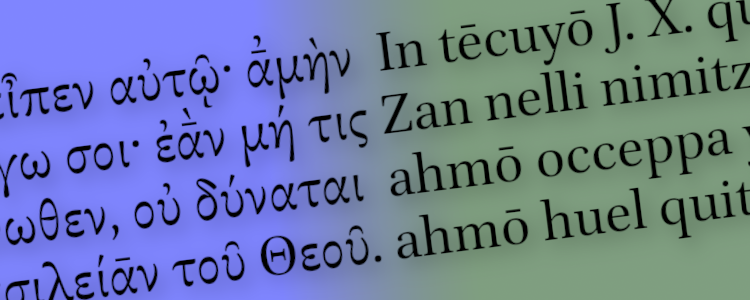
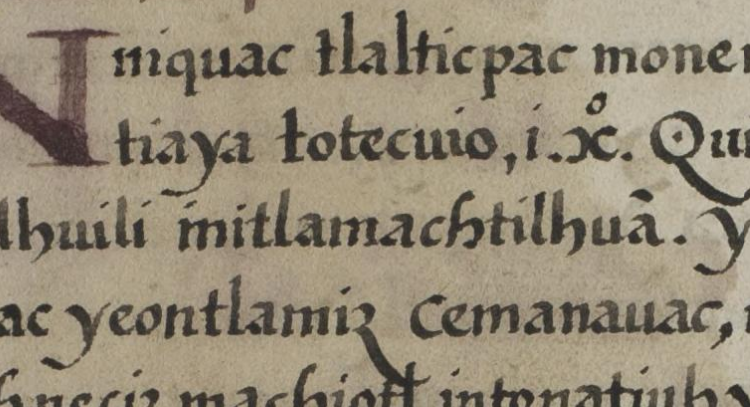
While I was down in Mexico this past week, I had lots of fun improving my knowledge of the local dialect of Nahuatl–the language of the ancient Aztecs, in case you didn’t know. And I was discussing the topic of greetings with a friend of mine down there, who informed me that when one person meets another (providing they both speak Nahuatl) they say Kejyaui! or sometimes just Yaui! for short. Both of these words come from a longer phrase that was used in the olden days which means “How is it going?”

As a pursuer of greetings, I naturally asked if these words would be the equivalent of the Spanish word Hola!, which I noted was practically a meaningless greeting.

“A greeting?” he said. “Hola isn’t a greeting, unless you say ¿Cómo estás? or ¡Buenos días! or some similar phrase along with it. Do you really think hola is a greeting?”

“I certainly thought so,” I replied. I let the matter rest, supposing it to be some cultural difference. It wasn’t until a day or two later that I realized why he had maintained that hola was not a greeting.

The key lay within the simple word “greeting.” In Spanish this word is saludo, but until now I had never considered where this word originated. Obviously it comes from salud, “health,” which in turn came from the Latin word salus. Something cannot be a greeting, a saludo, unless you inquire about the other person’s health (”How are you doing today?”, etc.). Upon researching the English word greeting, I found that it comes from our Germanic heritage, and has always meant what it does now–saying “hail,” “hello,” or whatever other greeting is in style, whether health is involved or not.

So, next time something odd like that pops up in my interlingual discussions, I will go back to the roots! You never know what treasures you’ll find…

No Comments »

Benjamin on April 26th 2008 in Mexico, Spanish, history, English

Back to the Roots

As English speakers, I think we often do not appreciate the great linguistic diversity that exists within our native language. All languages have their loanwords, but English has been more extroverted than most, to the point that it has departed drastically from its Germanic brethren. It is true that most of our everyday vocabulary is Germanic, but whenever we want a new technical word we have two Classical languages at our disposal: Latin and Greek.

Derivitives from these tongues are more numerous than you might think. I can’t believe anything that’s incredible, but it would be rude of me to call you cenocephalic. Alumni come from campuses (or should it be campi?) and it’s no wonder that platypuses have wide feet (platypodes, I suppose).

Anyway, I just wanted to encourage you to dig up the roots whenever you feel the urge for etymological excavation. I hope you find diversion in this activity! (Id est have fun!)

No Comments »

Benjamin on April 18th 2008 in language, Greek, Latin

An Early Christian Hymn

I’ve been studying Biblical Greek from quite a young age, and at times I wondered about the songs the first Christians sang. I figured many of them must have been in Greek, but have any of these hymns survived to the present day? As I researched this question recently, I discovered that there actually are Greek Christian hymns that have come to us through the ages from the early years of the church. That is, we have the hymns themselves, but not the music to which they were set.

However, in Oxyrhynchus, Egypt, someone came across a very unique papyrus–one of a kind, in fact–on which someone had written a Christian hymn to the Trinity, along with Greek musical notation.

You may not have known that the Greeks knew how to write music. Well, they did, and were quite advanced in their ideas of modes and music theory. But the importance of this little piece of papyrus that someone threw in an Egyptian rubbish heap ages ago is not that it has music (there is a good amount of extant Ancient Greek music), but that it is a spiritual song from the time when most all such songs were written with only the words–if they were written at all. Continue Reading »

2 Comments »

Benjamin on April 11th 2008 in Christianity, history, music, Greek

A Quote

“There’s nothing like a deadline to bring procrastinators together.”

— Benjamin Bruce

No Comments »

Benjamin on April 4th 2008 in miscellany

The Geologic Timetable

If you go to a museum and look at fossils, you can be almost certain that they will tell you of millions or billions of years ago when these fossils were made. The evolutionists have constructed what is called the Geologic Timetable. It is displayed in most places as if it were fact, just as a timeline of American history might be displayed at a museum, although in fact it is nothing but a list of geologic strata put together from an evolutionist’s imagination. Wayne Jackson described it well in “The Geologic Timetable,” an article printed in the Gospel Advocate:

“The truth of the matter is, this timetable is nothing more than a graphic conglomeration of assumptions that has been thrown together arbitrarily in an attempt to support the unprovable hypothesis of evolution. The concept of the geologic timetable conflicts with both the biblical record and the evidence of science.”

There are many facts that show the timetable to be incorrect, and here are a few of them:

  • Nowhere does the entire stack of geologic strata occur, and in some places they are out of order!
  • Human footprints have been found in the section of the timetable called the Paleozoic age, 250,000,000 years before people were supposed to have evolved!
  • Evolutionists say that the coal present today was formed in the same age, supposedly two-hundred and fifty million years before people. However, many different man-made objects such as tools and hats have been found embedded in coal.

As you can see, it is ridiculous that one would think that this Geologic Timetable is correct! However, it is a shame to go to museum after museum and see the same timetable displayed. At Palo Duro Canyon State Park, there’s even a big picture of it.

No Comments »

Benjamin on March 29th 2008 in Christianity, science